Word Seeker
- 4.4
- Rating
- 1.00M
- Installs
- Free
- Price
 Analysis by App-foxy
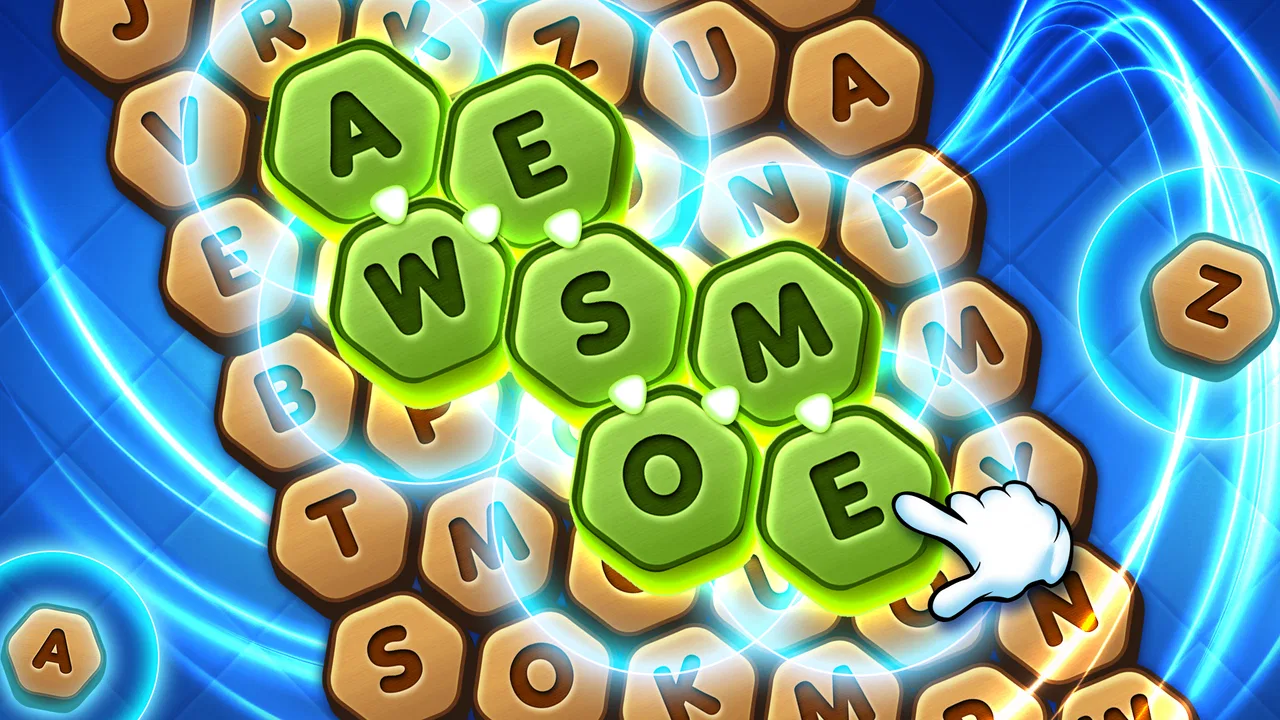
I spent time with Word Seeker as a small, straightforward word game built around one clear task: finding hidden words. That simplicity is its strongest starting point. I never had to learn a complicated control scheme or understand a long set of rules before playing. I could open it, look for patterns, and begin immediately.
That makes it a natural fit for short breaks rather than a game I would plan my whole evening around. I found myself reaching for it while waiting for an appointment, taking a quick pause from work, or winding down without wanting a demanding action game. The basic idea is familiar, but the appeal comes from how quickly it turns a few spare minutes into a focused search.
It is a free word game from Gimica GmbH, rated for Everyone. The app has reached over a million installs and holds a 4.4 average from roughly twenty-three thousand ratings, which suggests that its uncomplicated format has found a broad audience. I can understand that appeal, although its relaxed design will not suit people looking for a deep vocabulary adventure or a highly competitive puzzle experience.
You May Also Like

 Blood Strike: 2.5 Anniversary
Blood Strike’s Loadouts Turn Every Drop Into a Tactical Gamble
A close look at Blood Strike’s custom loadouts: how fast access to signature weapons reshapes its battle royale rhythm, rewards preparation, and narrows the gap between fights.

 Pandora - Music & Podcasts
Pandora’s Music Is Easy to Start, but Harder to Recover
Pandora’s strength is its low-effort path from a seed to a station. Its weak spot is how much confidence it asks you to place in connection, setup, and quiet recovery.

 8 Ball Pool
 Is Built on Rivalries, Rematches, and Routine
A close look at the rivalries, rematches, shared routines, and unanswered safety questions that turn a quick pool match into a persistent mobile community.

 Samsung Music
’s Quiet Strength Is Playing What You Already Own
Its reach comes less from spectacle than from dependable access to a personal library. That simplicity is both the app’s strongest retention engine and its ceiling.

 AccuWeather: Weather Radar
AccuWeather Review: A Quick, Clear Forecast for Everyday Decisions
For everyday plans, the best forecast is the one you can understand quickly. AccuWeather makes rain timing, radar, and local conditions easy to act on, with a few trade-offs.

 Hill Climb Racing
Why Hill Climb Racing Still Turns Crashes Into One More Run
A tiny car, a bumpy hill and one more upgrade: Hill Climb Racing keeps resurfacing because its simple chaos makes every near-miss feel personal.
More From Our News Desk



How the early goals pull you into the search
The first goal is immediately understandable: scan the available letters and uncover the words hidden among them. That clarity matters because it removes the usual opening friction. I was not spending my first session reading instructions, adjusting a character, or learning several overlapping systems. The game points me toward observation and word recognition from the beginning.
Early progress feels satisfying because each discovered word gives me a small, visible sense of completion. Even when the answer is obvious, finding it creates a useful rhythm: inspect the board, test a possible word, and continue looking. That loop is simple enough for casual players but still gives a reason to stay with a puzzle for another moment.
One practical strength is that the game works well when my attention is divided. I can play a little, stop, and return without needing to remember a story or a complicated objective. That makes it more convenient than many larger word games, especially when I want something that respects short sessions.
There is also a useful difference between playing it casually and playing it deliberately. In a casual session, I can search for the most visible words and enjoy the quick wins. In a more focused session, I start checking less obvious letter combinations and looking at the arrangement rather than reading only from left to right. That second approach gives the basic premise more depth than the short store summary suggests.
I recommend treating the opening goals as a warm-up for visual attention rather than as a test of advanced vocabulary. The game is at its best when I approach each puzzle with patience. Trying to rush every answer can make the screen feel cluttered, while slowing down often reveals words I initially overlooked.
Why the progress feels clear without becoming complicated
Word games depend heavily on progress signals. If every solved puzzle feels identical, the player quickly loses interest. Here, the main signal is the steady act of uncovering what remains. I can see the puzzle becoming more complete, and that unfinished state gives me a reason to continue searching instead of closing the app after the first answer.
I particularly like this kind of progress because it is easy to understand at a glance. I do not need to compare several resources or remember a complicated upgrade path. The immediate question is simply whether I have found everything that the current challenge is asking me to find. That keeps the experience accessible for younger players and for anyone who prefers games with low mental overhead.
At the same time, the minimal structure creates a trade-off. Players who expect elaborate unlocks, character development, narrative rewards, or a large collection of tools may find the progression too light. The satisfaction comes from solving and moving onward, not from building a long-term virtual identity. I see that as an intentional limitation rather than a flaw, but it is important when deciding what kind of game this is.
A useful personal routine is to separate recognition from confirmation. I first scan the whole puzzle and note words that seem likely, then I enter them in a more measured way. This prevents me from fixating on one corner of the board and makes the search feel less random. It also helps when a puzzle contains several familiar words competing for my attention.
The app’s broad reach makes sense in this context. With more than a million installs, it is clearly positioned as an approachable casual title rather than a specialist word-training tool. I would recommend it to someone who wants a gentle daily mental exercise, but I would not present it as a replacement for a structured language-learning app or a serious competitive word platform.
Difficulty, pacing, and the point where patience matters
The most important question for a hidden-word game is whether the challenge grows in a way that feels fair. In my experience, the appeal depends less on dramatic difficulty spikes and more on how the search changes from obvious recognition to careful inspection. A good puzzle gives me enough early success to understand the arrangement, then asks me to look again before I can consider it finished.
That pacing supports short sessions. I can solve a little without feeling trapped in a long commitment, yet an incomplete puzzle continues to occupy my attention. This is a good balance for a phone game because it creates a natural stopping point without making every session feel disposable.
The difficulty can also feel personal. Someone with a strong vocabulary may move quickly through familiar words but still need time to notice their placement. Another player may know the relevant word but miss it visually. In that sense, the challenge is not only linguistic; it is also about scanning, orientation, and resisting the urge to assume that the first visible answers are the only important ones.
My main caution is that the gentle format may eventually feel repetitive to players who need constant novelty. The core activity remains searching for hidden words, so the experience does not offer the variety of a word game that mixes anagrams, timed rounds, clues, and competitive matches. If I wanted a more intense test, I would choose an alternative with explicit timers or head-to-head play. If I wanted a calmer search, this design would be the better match.
For a realistic everyday example, I could play it during a ten-minute train wait. I would solve a few words, put the phone away when the train arrived, and return later without losing the basic thread of the activity. That is more useful to me than a game that requires a long uninterrupted session or punishes me for leaving at an inconvenient moment.
What keeps the game going, and where retention can feel thin
The strongest reason to continue is the unfinished search itself. Once I have found several words, leaving one or more discoveries unresolved creates a small amount of mental tension. I want to complete the pattern, not because the game is overwhelming me with demands, but because I have already invested attention in the current puzzle.
That is a healthier kind of retention for a casual game. I can return because I am curious, not because I need to protect a complicated streak or maintain a demanding schedule. For me, this makes the app easier to recommend to people who want entertainment without another obligation competing for their time.
Still, the same restraint can limit long-term motivation. Players who enjoy collecting rewards, chasing rankings, or unlocking substantial new mechanics may not find enough pressure here. The game’s pull is strongest when I am in the mood to search. It is less convincing as a permanent primary game, especially if I have already played many similar word puzzles.
The in-app purchase range is from ninety-nine cents to four dollars and forty-nine cents per item. I would approach those optional purchases carefully and decide first whether the free experience already gives me the kind of sessions I want. A free entry point is valuable, but any player who dislikes purchase prompts or prefers a completely fixed-cost experience should pay attention to how those offers fit into their own tolerance.
Another retention trade-off is the balance between help and satisfaction. When I am stuck, I may be tempted to seek assistance too quickly, but doing so can weaken the pleasure of discovering the answer myself. My advice is to pause, change the direction of my scan, and revisit the letters before using any available aid. That small habit preserves the challenge and makes successful discoveries feel earned.
This is also where the game differs from many daily word alternatives. A daily format can create a strong appointment, while a competitive format can make every answer feel urgent. Word Seeker is more flexible and less stressful, but that flexibility means it may not create the same powerful routine for players who need external pressure to return.
Who will enjoy it most, and who should choose something else
I would recommend it to casual word-game fans, families looking for an accessible puzzle, and players who enjoy visual searching as much as vocabulary. The Everyone rating supports that broad positioning, and the simple objective makes it approachable even for someone who does not usually play mobile games.
It is also a good choice for people who prefer quiet concentration. I can play without needing fast reflexes, detailed planning, or a large amount of free time. The game gives me a small mental task that is easy to understand and easy to leave behind when real life interrupts.
I would be more cautious about recommending it to expert word-game players who want rare vocabulary, strict time pressure, or sophisticated competitive systems. I would also point frequent players toward a different option if they need a strong long-term progression structure. This title’s pleasure is in the search itself, and that focus may feel narrow when compared with broader puzzle collections.
Device compatibility is also worth checking before installing: the current version is 1.4.0 and requires Android 7.0 or later. That makes it suitable for many older Android phones, although anyone using a device below that requirement will need a different word game. I appreciate that the entry barrier is otherwise low, since the app is free to start.
My progression verdict after using the full loop
Gimica GmbH has built a game around a clear, repeatable idea rather than surrounding the search with unnecessary complexity. The early goals are easy to grasp, the visible completion of each puzzle provides a dependable progress signal, and the pacing works particularly well for short breaks. I found the experience most enjoyable when I treated it as a calm exercise in attention instead of expecting a large adventure or a competitive ladder.
The trade-off is equally clear. Its focus can make the experience feel limited for players who need constant mechanical variety. The optional purchases, ranging from ninety-nine cents to four dollars and forty-nine cents per item, are another reason to decide in advance how much I want to spend rather than buying impulsively while stuck.
Overall, I think Word Seeker succeeds as an approachable hidden-word game. It does not need complicated rules to create a useful loop: find what stands out, inspect what remains, and enjoy the moment when the puzzle finally looks complete. I would keep it installed for relaxed sessions and recommend it to a friend who wants a free, low-pressure word game. I would skip it only if my priority were competitive play, advanced language training, or a progression system much larger than the search itself.
For my final recommendation, I would start with a few short sessions before considering any purchase. Notice whether the act of scanning and completing puzzles is satisfying on its own. If it is, the game offers a pleasant way to fill spare minutes. If the basic search already feels repetitive, extra content is unlikely to change that fundamental preference. That is the clearest way to judge whether this particular style of word game belongs on your phone.
FAQs for Word Seeker
01What is the main objective of Word Seeker?
Word Seeker is a dynamic puzzle game designed to challenge your vocabulary and critical thinking skills. The main objective is to find hidden words within a grid of letters. As you progress, the complexity increases, offering a stimulating experience for both casual players and word game enthusiasts alike.
02Is Word Seeker suitable for all age groups?
Yes, Word Seeker is designed to be accessible and enjoyable for players of all ages. The difficulty levels are adjustable, making it suitable for children developing their vocabulary skills, as well as adults looking for a challenging mental exercise. Parental controls ensure a safe experience for younger players.
03Are there any in-app purchases in Word Seeker?
Word Seeker offers a variety of in-app purchases to enhance your gaming experience. These include additional hints, exclusive levels, and ad-free gameplay. While the core game is free to play, these optional purchases provide added benefits for those looking to expand their experience without interruptions.
04How does Word Seeker handle player data and privacy?
Word Seeker takes player privacy seriously. The app collects minimal data necessary for gameplay, such as progress tracking and high scores. All data is encrypted and stored securely. The app complies with relevant privacy regulations, and a detailed privacy policy is available within the app settings for transparency.
05Can Word Seeker be played offline?
Yes, Word Seeker can be played offline, making it a perfect companion for travel or areas with limited connectivity. However, certain features such as leaderboards and daily challenges require an internet connection. Offline play allows you to enjoy the game anytime without needing Wi-Fi or mobile data.
Pros
- Engaging puzzles enhance vocabulary skills.
- Simple interface is user-friendly for all ages.
- Offline play available for on-the-go fun.
- Daily challenges keep gameplay fresh.
- Adaptive difficulty suits all skill levels.
Cons
- Limited hints can stall progress.
- Ads between levels may disrupt flow.
- In-app purchases for extra features.
- Occasional lag on older devices.
- Repetitive puzzles might bore advanced players.

Word Seeker
Gallery